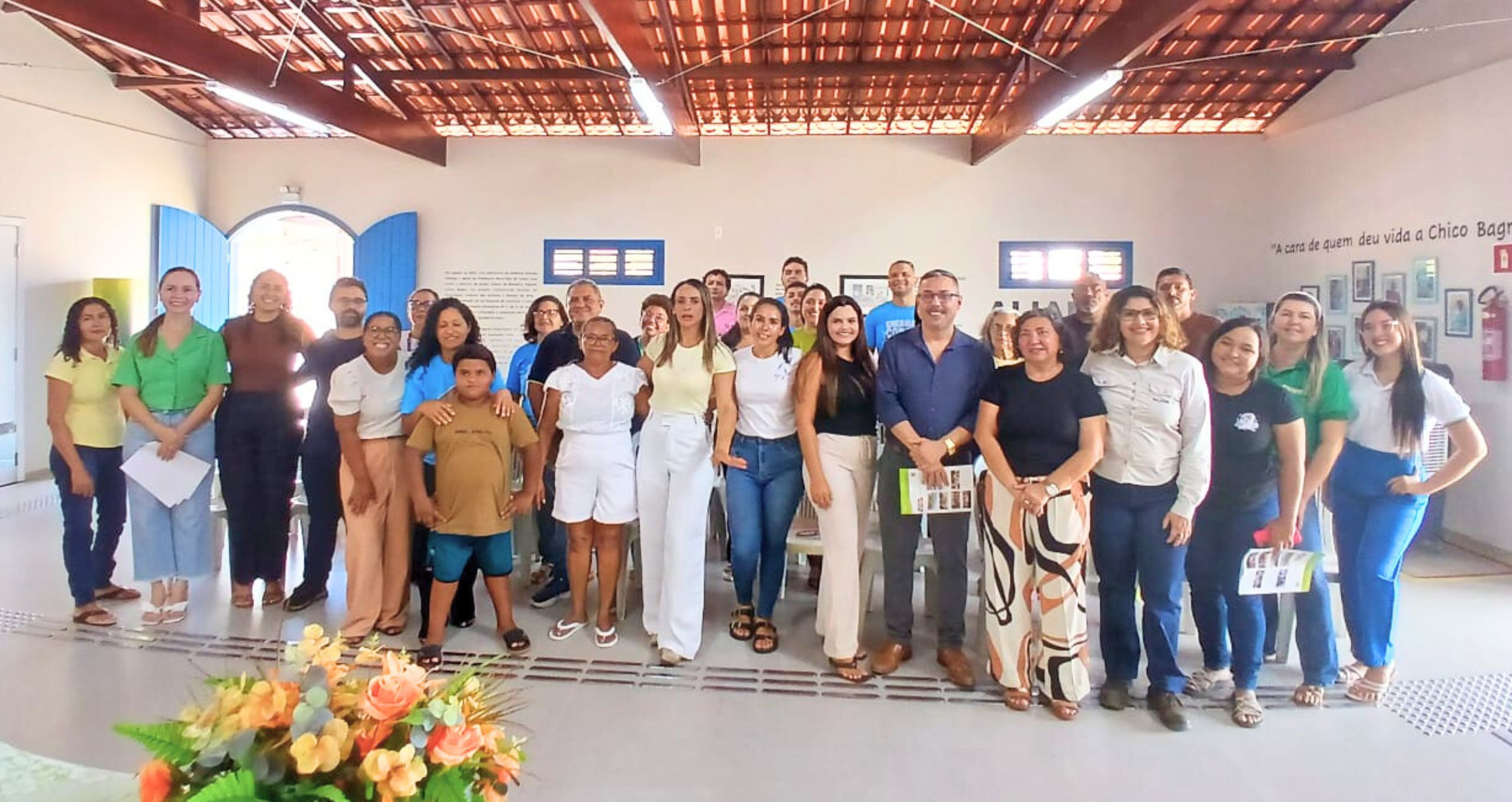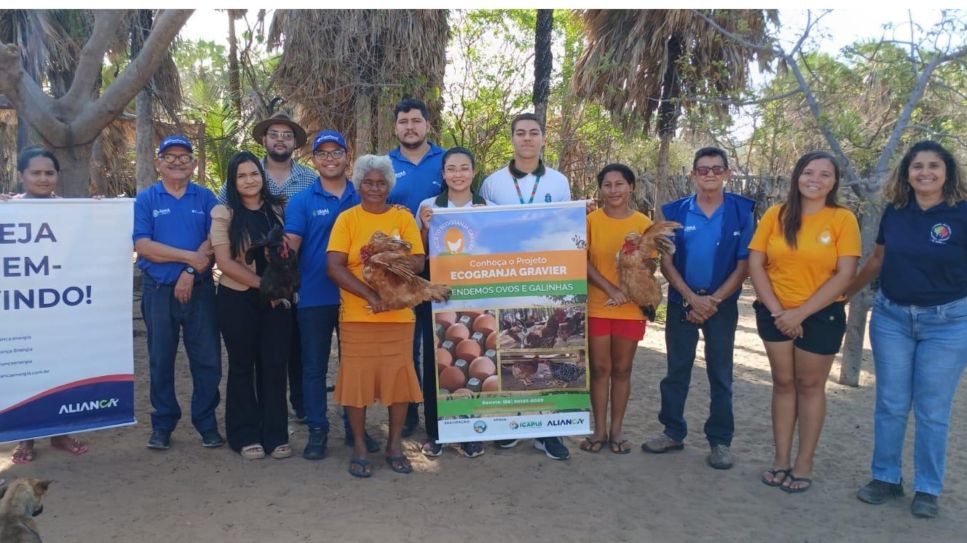
On November 27, Aliança, in partnership with Ematerce and the Community Association for Sustainable Development of Gravier, held the Workshop on Sanitary and Food Management of Free-range Poultry, aimed at the group of producers of the Ecogranja Gravier Project, in the municipality of Icapuí/CE, close to the company’s projects in the state of Ceará.
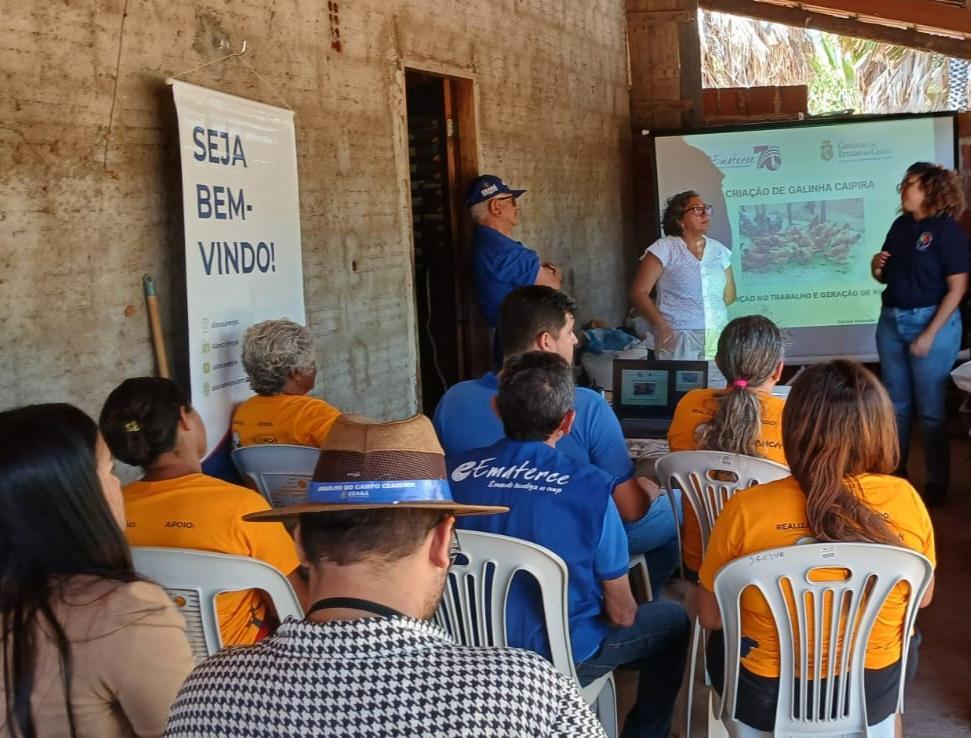
The workshop was given by veterinarian Francisco Carlos, from Ematerce, and was attended by 15 people, including women producers of the project and students of the Agribusiness course at the Vocational School of Icapuí. The training lasted 7 hours, combining theoretical and practical activities.
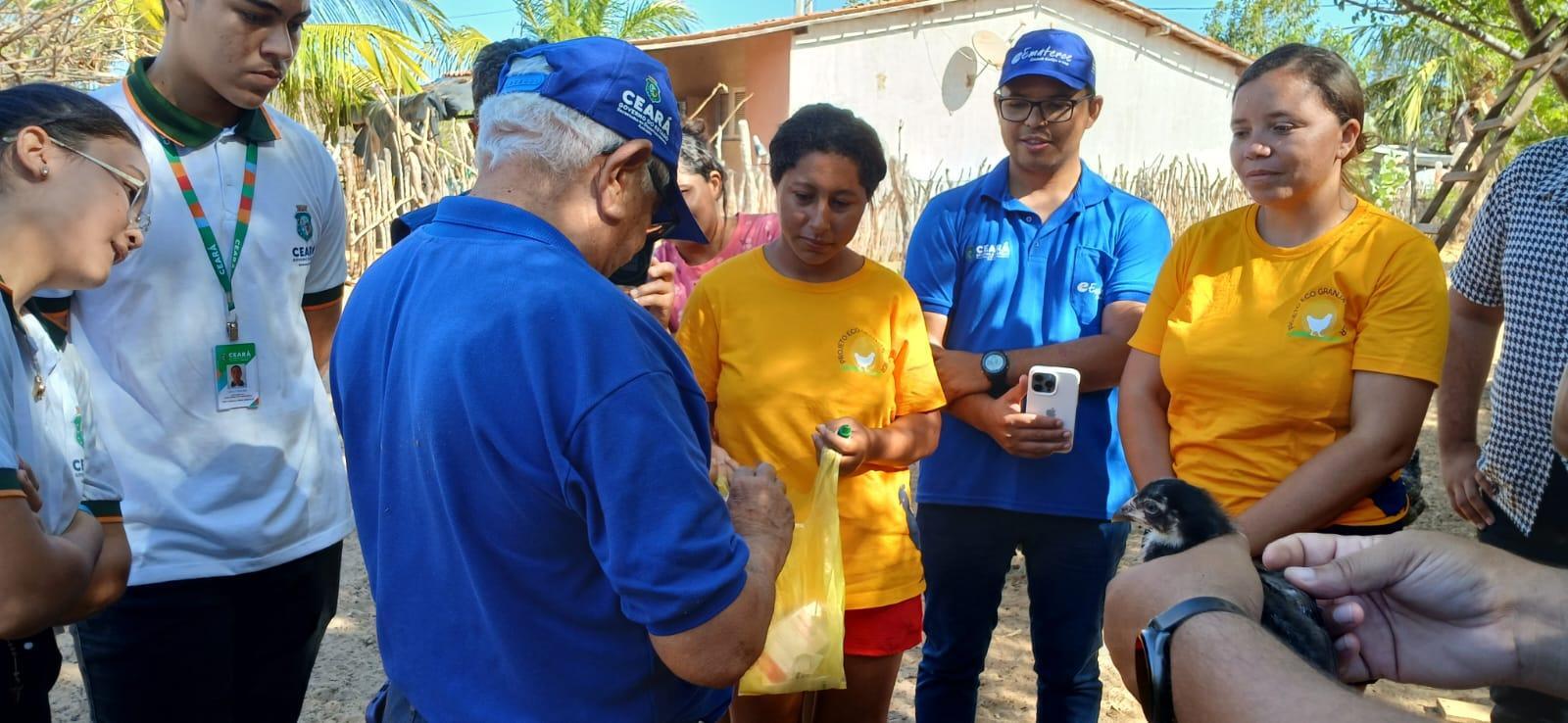
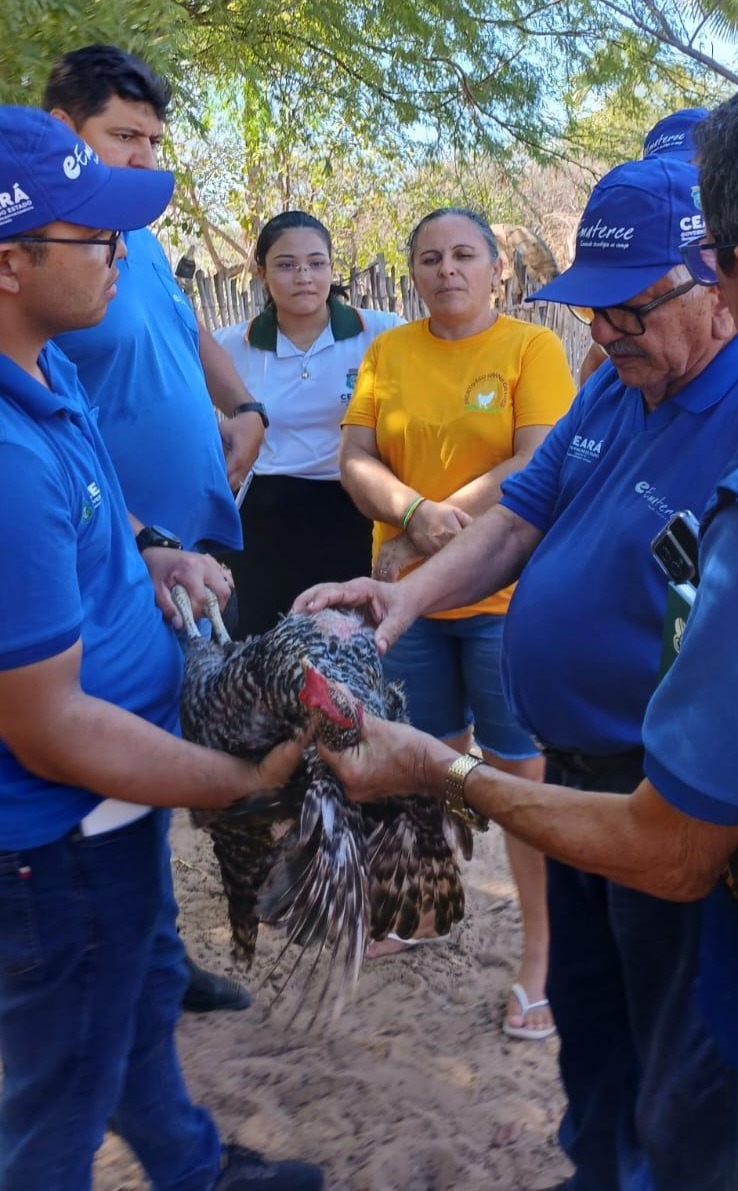
During the training, topics related to the main challenges faced by poultry farmers in raising laying birds, the appropriate environments for rearing, the importance of vaccination as a measure to prevent diseases such as Newcastle, Avian Cowl and Infectious Bronchitis, in addition to carrying out a poultry vaccination practice, were addressed. Biosecurity measures were also discussed to prevent the entry and spread of diseases, reducing economic losses and ensuring the health of the herd and the quality of the product.
Another relevant point of the workshop was the presentation of alternative foods that can complement commercial feed, such as moringa, gliricidia, crushed forage palm and leucaena, with the aim of reducing feed costs, improving the welfare of birds and contributing to better production performance.
According to Aliança’s Community Relations analyst, Maria Rodrigues, the workshop was extremely valuable for the Ecogranja Gravier Project, contributing to the success of the producers and to the improvement of the health and productivity of the birds.
For Ematerce’s ATER Auxiliary Agent, Toni Halan da Silva Irineu, the training represented an important advance for the activity in the community: “the training aimed to solve obstacles faced by poultry farmers in the breeding of laying birds, especially related to phytosanitary and food problems. The guidelines passed on contribute to the reduction of losses, the improvement of production and the sustainability of the activity.”
Producer Maria Renata Pereira highlighted the practical importance of training, highlighting the lessons learned about chicken care, food management, hygiene, disease prevention, vaccination and the correct use of feed from the pre-starter phase to laying.
Aliança Energiae’s actions are aligned with the UN Sustainable Development Goals (SDGs), with emphasis on SDG 2 – Zero Hunger and Sustainable Agriculture, SDG 4 – Quality Education, SDG 5 – Gender Equality and SDG 8 – Decent Work and Economic Growth.

For Aliança, workshops like this highlight the importance of technical training for local production, promoting better management practices, increased productivity and sustainable income generation for the families participating in the project.